Contributors

Thursday, 12 March 2015

The US Constitution - does it still work and is it relevant?

The US constitution. Picture Credit: Time Magazine
While contemplating returning to the topic of the US Constitution with the U6th I came across this article in Time Magazine from 2011 about the US Constitution. Most usefully for G and P students doing Unit 4C it discusses whether it is still relevant and useful today. This is a key theme which is likely to come up on the Summer exam.

An essential read for anyone doing US politics (even if it is 4 years old)!

Saturday, 7 March 2015

Independent MPs and Pressure Groups

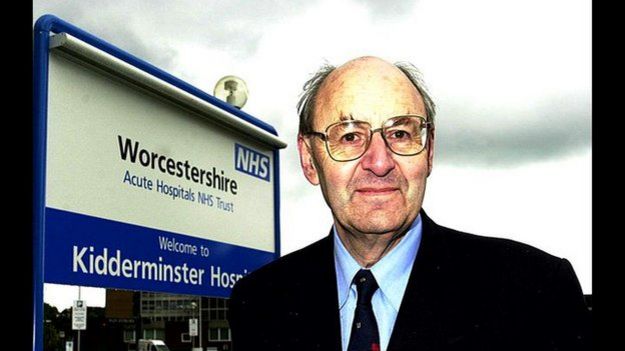
In brief, BBC news has a profile of the most successful independent MP of recent years; a doctor who in 2001 stood for a single policy, to save his local hospital in Kidderminster. Dr Richard Taylor won again in 2005 but lost in 2010. He is now standing again as leader of the National Health Action Party.
Dr Richard Taylor. Picture Credit: BBC News

Good for any G and P student contemplating independent MPs and also wondering about the difference between political parties and pressure groups. The NHA certainly has a narrow focus, but does blur the lines between a party and a pressure group.

Saturday, 28 February 2015

Conservative Party and devolution. Labour and tuition fees

Two headline-grabbing political policies from the two main parties:

Conservatives


Cameron promises to give the Welsh Assembly more powers, including being able to call itself a Parliament and being able to raise its own income tax. Interesting for G and P students in unit 1 considering how Cameron has changed the Conservative party since the days of Thatcherite concentration of power in Westminster.

Labour


Miliband promises to lower tuition fees for University students to £6k from its current £9k. Again - interesting to consider how this fits into the narrative about the Labour party and its move away from / back towards more left-leaning policies.

The BBC's Robert Peston analyses the fiscal implications of all of this here.


Republican Conservatism according to Rolling Stone

I've just come across this piece from Rolling Stone Magazine which explains an aspect of modern tea-party-inspired Republicanism:
The entire narrative of modern conservative politics casts the United States as a fast-disappearing Eden of freedom and democracy that's under siege both here and abroad, surrounded by a constellation of enemies united (for some never-fully-explained reason) in their passionate hatred for the simple, God-fearing, freedom-loving American.
While this rock'n'roll magazine is by design fairly liberal, it is certainly food for thought for anyone contemplating the nature of Republicanism (although for my money I don't think that quoting Fox News and saying that it can be very anti-liberal is especially surprising).

Protests in the snow against a pipeline. Picture credit - BBC

Elsewhere, the President has done his third veto about the "Keystone" pipeline between Canada and USA - essentially to make the point that only the President can make international agreements and not Republicans in Congress.

Embedded is a great video explaining why the pipeline is so controversial:


Monday, 19 January 2015

Should voting be compulsory?

AJB has pointed me towards an article on the BBC's web-site which discusses whether voting should be compulsory. Great for the Democracy section of Unit 1.

In addition, he has also found this - an item on whether party leaders actually win elections. The short version - probably not.

In a related piece, the Independent covers three polls which came out at the same time, and which have different results - the answer is too close to call an probably won't be known until the election itself is run.

Great stuff!

Thatcher and Europe

Any G and P student studying Unit 1 should be able to discuss some of the policies of Margaret Thatcher and how the current Conservative Party compares.

One of the many points of comparison is certainly Europe, and the Atlantic is on hand to offer some analysis. The take-home message is that although Thatcher was against the Euro and famously won the British rebate she was not rabidly anti-Europe as some make out.

Here is a clip of her in full flow giving her response to the suggestion that Britain gives up the Pound and agrees to a larger integrated Europe (go to 2:05 for the famous bit).


Big Block of Cheese Day

Anyone who is a fan of the West Wing TV show should remember an episode in Season 1, called "The Crackpots and These Women", where Leo refers to President Andrew Jackson who put a big block of cheese in the White House for anyone who wanted it. In the TV drama special interest groups are given access to senior staff to press their causes.

The real White House has taken this as inspiration and created their own "Big Block of Cheese Day"; this time on the internet. Specifically they are devoting a day after the State of the Union on 20th January for members of the Obama administration to answer questions on line about issues raised in the set-piece speech.

For G and P students studying Unit 4C this is useful because it is a good example of the President's administration communicating their ideas with the public. It is also a good example of when the President is trying to press his agenda in the media using the "bully pulpit" of the State of the Union.

Here is the video from the White House with a few familiar faces thrown in:


Friday, 26 December 2014

Labour and Scotland - party differences?

A post on the BBC blog from Mark Mardell is fascinating for many reasons; for G and P students studying Unit 1, especially significant since it discusses the implication of devolution on party policy. The party has elected a former Blairite to be the leader of Labour in Scotland.

To be specific, the Labour Party in Scotland is likely to be more "left-leaning" than the party in Westminster as Scotland itself is on average (Mardell argues) more left-leaning than England is on average.

There are implications for the Labour party in the 2015 election; if it loses enough of its Scottish Westminster seats to the SNP as currently seems likely, then it will not be able to win power at Westminster. I posted about this earlier in the year:

Picture Credit: UK Polling Report
The implications for party policy across the UK is potentially significant, with parties increasingly having their own national policies better suited to local issues. This may in turn help lead to a more federal UK.

However, Labour is the only party which has (had?) a large established following in Scotland, closely followed by the Lib Dems. The Conservative Party has little power in Scotland, or much of Wales. Therefore, how the Labour Party deals with these issues over the next few years is potentially very important for the rest of the UK and its political parties.

This is also probably an issue worth bringing up in any question about party policy / traditions and devolution.

Saturday, 20 December 2014

Constitutional Reform - Coalition in action

The Coalition has released proposals which aim to solve the so-called "West Lothian Question"; or to put it another way, "English Votes for English Laws".

Proposals on how to change the British constitution further have been announced by Commons Leader William Haig. The Coalition released a document which explains the ideas put forward by both parties - fascinatingly, the final part has the different ideas of the two parties in colour-coded sections.

G and P students certainly need to bear in mind that constitutional reform is an important theme of Unit 2 and that current issues, like the Scottish Referendum and the ensuing repercussions should be mentioned.

Wednesday, 10 December 2014

Senate Report on Torture

The Senate, in its last days before becoming Republican-dominated, has just published a report into the interrogation techniques used by the CIA after 9/11.

G and P students should bear this in mind when considering the effectiveness of Congress's oversight of the Executive; finally these techniques are called "torture". However, according to Rolling Stone no-one will get prosecuted for it.

The article discusses the likelihood of the Obama administration being investigated for similar things in future, and reckons it's probable. However, this all may be more about political partisanship than effective oversight by the legislature.

Fascinating stuff.

Monday, 10 November 2014

Voting and Labour in 2015

I came across a fascinating blog by the Economist which led me to this page by YouGov's Anthony Wells; it analyses the voting habits by the public since 2012, and crucially indicates how their habits change over time.

For Ed Miliband the Labour leader, there are many problems - but perhaps the main one is that people who had supported Labour are moving their support to the SNP, UKIP and Green.

Look at for example, 2012:

Movement of voters. Picture credit: UK Polling Report

and compare it to 2014:

Movement of voters. Picture credit: UK Polling Report
Great for any G and P student wondering about party support in the next election, and also about the similarities / differences between political parties and their ideas.

Although the Conservative party are clearly losing out to UKIP, they are essentially stable because of the voters who used to vote Conservative and said they would not vote are turning instead to UKIP.


Thursday, 6 November 2014

History and Politics trip to Washington

Embedded in this page - a set of highlights of the Washington DC trip that a group of History and Politics students went on over the half-term break.

Mid-terms 2014

The Mid-terms saw both the House and the Senate being controlled by the Republicans. Further detail about races and the overall view here from the BBC. For example, Democratic Representative for New York Louise Slaughter, an experienced member of Congress, won by the narrowest of margins; 50.2% to 49.8%. "Blue-Dog" Democrat John Barrow lost, meaning that conservative Democrats are largely extinct in Congress.

What are the prospect for the US Government in the next two years? President Obama and new Senate Majority Leader Mitch McConnell have pledged to work together on issues they both agree in (tax reform and foreign trade pacts).

Further analysis here from the Economist, which highlights the problem - the Tea-Partiers and others may not allow the two to work together. Rolling Stone magazine discusses this very issue here, and looks forward excitedly to the battle within the Republican Party and the Presidential election of 2016.

All of which is great for G and P students contemplating the powers of Congress and the President for Unit 4C and elections in Unit 3C. If there is continued gridlock (something the Republicans are trying to blame on the Democrats), the President may well use executive orders to get things done; for example on immigration.

It must be borne in mind, however, that the turnout for these mid-terms is very low, and is lower than the last mid-terms in 2010 (there is a great map and selection of graphs on this page). Overall, it was 36.6% down from 40.9%; somewhat predictably, Democrat-supporting voters were the least likely to turnout to vote.

As a final note, Rolling Stone's October issue had a great article by Economist Paul Krugman favourably evaluating the Obama Presidency. Well worth a read.

Thursday, 23 October 2014

Republicans, Tea-Party-ers and Kansas

A quick post - any G and P student contemplating the Tea Party and the Republicans as they head towards probable success in the mid-terms, and then onto the 2016 Presidential-race, should take a look at this piece in Rolling Stone Magazine.

It's a fascinating look at the race for Governor in Kansas, where the incumbent Republican, a Tea-Party-supporting Sam Brownback is presiding over what he has described as an economic "experiment". The short version is that he has enacted most of what the Tea-Party has demanded; no compromise, low-taxes and low-spending.

The result? To quote the Washington Post:

 the state is now reporting a more than $300 million revenue shortfall. The poverty rate increased. The state’s economy expanded a total of 2.3 percent in inflation-adjusted terms over the past two years, half the rate of its four neighbors. And Kansas’s credit rating has been downgraded.
Interestingly, prominent Republicans in the state seem not to like this, and are jumping ship.

All of which is fascinating for politics students contemplating the Republican Party and politics in the USA as a whole. And probably much less fun for the people of Kansas, sadly.

Tuesday, 7 October 2014

Gay Marriage and Blue Dog Democrat(s)

The US Supreme court has refused to hear appeals from states wanting to ban gay marriage, The Economist sees this as very significant, and Politics students could use this as an indication of where the court stands currently.
A same-sex wedding ceremony.
Picture credit: Marc Love / Wikipedia
essentially meaning that although they won't now be making any sort of decision on it, the lower (Federal) court decisions that saw any ban as unconstitutional will stand.


The Roberts court could have been activist and made a ruling, but it didn't. As the Economist notes there are theories why this is the case - in a politically divided country this would perhaps have made the situation worse. The Guardian sees this as an expansion of gay rights. Helpfully, the Wikipedia page goes into all of this, noting that it is currently legal in 25 states and that many thousands of couples have taken advantage of the new law.

A "conservative" court may find that banning gay marriage at this point would be very tricky.

Elsewhere, the Economist (again) has an interactive map about the mid-term race in the Senate; the short version is that the Republicans may take a 50-48 lead over Democrats with 2 seats being held by Democrat-friendly Independents.


Lastly, the Blue Dog Democrat is almost an extinct species; one of the last conservative Democrat holding a seat in the deep South is fighting a difficult battle in the 2014 House races.

Useful for Unit 3C - Democratic Congressman John Barrow from Georgia is a great example of someone who has kept in the centre while the rest of politics in the US becomes divided.