Contributors

Showing posts with label Conservative Party. Show all posts

Thursday, 23 July 2015

Party politics - Labour party in-fighting, and Conservative policies

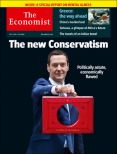
The Economist's take on the 2015 budget:
"Politically astute, economically flawed".
Picture Credit; Economist
The recent Conservative budget (the first Blue budget since 1996) was interesting mainly because it took inspiration from various Labour Party policies ("a living wage") while still sticking to traditional Conservative policies. Main details here, and analysis from the Economist's leader here. There is much to applaud, and also to critique.

However, more interesting is its impact on Labour.

The current Labour leadership battle is fascinating because (apart from anything else) it is a look at the various factions in the Labour Party.

Clearly for G and P students taking Units 1 and 2 in Summer 2016 it'll probably be useful background. By the time the exam takes place there will be a leader in place and there shall be the outline of Labour policy; essential for the "Party Politics" topic of Unit 1.

Despite winning 3 elections and being the most successful Labour leader ever, Tony Blair is despised by some in Labour circles for, principally at least, the Iraq war. His intervention in the Labour Leadership election became controversial, because he warns against Labour "turning left" - in other words becoming "Old Labour" rather than "New Labour".

Which brings us onto the leadership candidates. Details of them can be found here on the Wikipedia page - for our purposes at the moment there is the left-leaning Jeremy Corbyn and the Blairite Liz Kendall, plus Andy Burnham and Yvette Cooper who were part of the previous Labour regime. Stephen Daisley on STV has a great comparison of the different candidates here; most importantly he highlights quite how vicious and unpleasant it has become. For some left-wingers, Liz Kendall is not "Labour" enough and should be a Tory.

At time of writing Corbyn is in the lead prompting Blair's intervention. The battle seems to be between people who want to win elections by formulating policies which the public will vote for, and those who want to remain ideologically "pure".Typical of the genre is this rather unstructured tirade by Bryan Gould in the Guardian:

I have watched in disbelief as Labour leaders have sought to explain their unwillingness to stand firm and fight for what they supposedly believe. We are told that the voters’ support for further victimising those who have been left to pay the price of a recession for which they have no responsibility means that there is nothing further to be done.
“We can’t fight the electorate” is the siren call. But how are the voters likely to view a party that so manifestly lacks the courage of its convictions? Will they not conclude that Labour is fatally short of both courage and convictions?


By contrast here is fascinating analysis from Stephen Daisley; "it's not enough to be right, in politics you have to win too".

One of Daisley's important points is that Labour in the future not only has to win support from voters in England, but also has to win back support in Scotland - the SNP is doing very well and it will be a long battle to get Scotland back. This is a topic for another day:
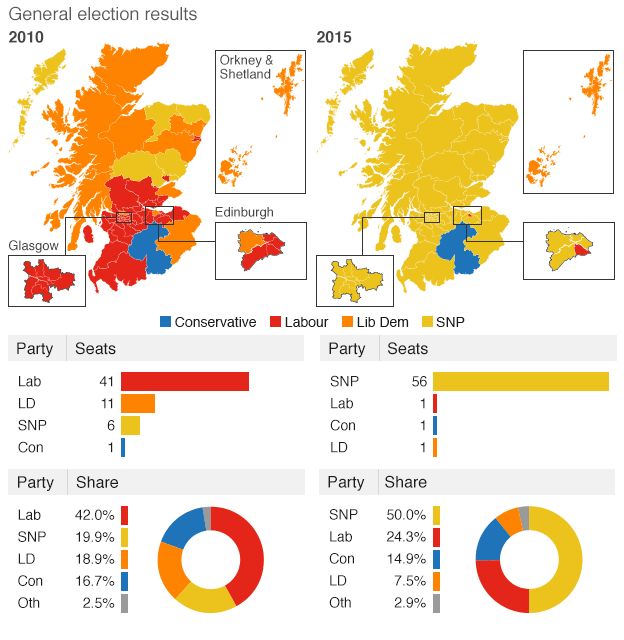
2015 Scottish General election result compared to 2010.
Picture credit; BBC.

Saturday, 4 April 2015

The Leaders' debate, the electoral system, and the party system.

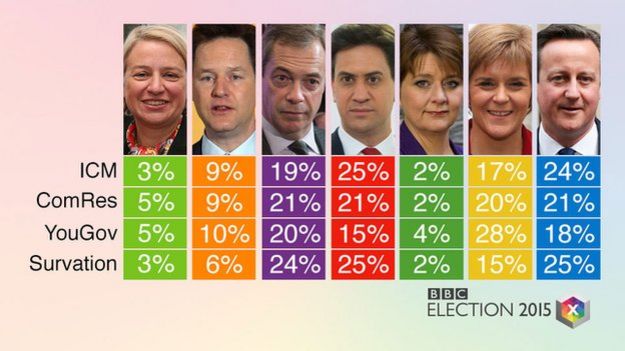
I'm not sure it tells us anything about the result, but the Leaders' debates served to show that the UK is really a multi-party system. Somewhat predictably, comments by Nigel Farage were later criticised. Snap polls after the debate show that the result is still close:

Picture Credit: BBC

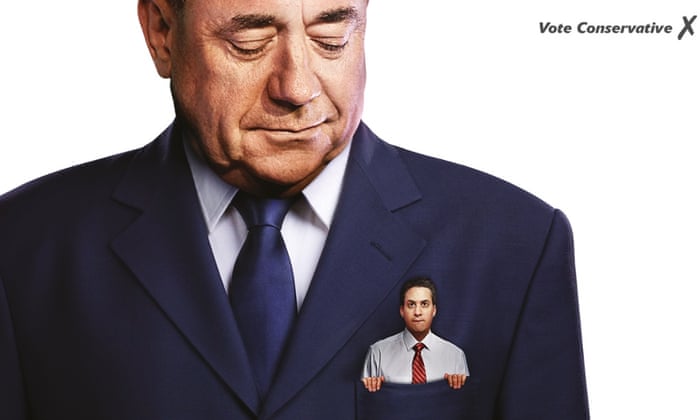
Picture credit: Conservatives / The Guardian

Perhaps most crucially 3 of these "minor" parties are now led by women.

In addition, it is no longer a 3-way battle for influence, the debate showed us that in the UK there are many parties which are claiming with some truthfulness that they represent a large portion of the population. As a result, the FPTP system is arguably now inadequate to the task of electing a stable government which can run Britain.

The likelihood of a major portion of the population feeling disenfranchised and left out is a real risk (imagine the effect on England of an SNP-Labour alliance in Westminster for instance). The Economist has a piece here which analyses the debate and reflects on the influence of the SNP.

SNP reply to Conservative poster. Credit: SNP / Herald Scotland
Analysis about the debate can be found here from the BBC, here from the Independent (which notes that the SNP's Nicola Sturgeon increased her support as a direct result of the debate), and the body-language is analysed here in the Guardian.

The Spectator analyses Cameron's prospects here (he did OK and didn't lose as badly as Miliband).

The Economist has a piece here about what the prospects are for Britain in the future (the TLDR summary is "not great").

For a bit of light relief, have a look at Buzzfeed's collection of the best jokes (eg. comparing the debate to a bad edition of "Take Me Out").

The whole thing can be watched here:


Or highlights can be found here:

Monday, 19 January 2015

Thatcher and Europe

Any G and P student studying Unit 1 should be able to discuss some of the policies of Margaret Thatcher and how the current Conservative Party compares.

One of the many points of comparison is certainly Europe, and the Atlantic is on hand to offer some analysis. The take-home message is that although Thatcher was against the Euro and famously won the British rebate she was not rabidly anti-Europe as some make out.

Here is a clip of her in full flow giving her response to the suggestion that Britain gives up the Pound and agrees to a larger integrated Europe (go to 2:05 for the famous bit).


Monday, 10 November 2014

Voting and Labour in 2015

I came across a fascinating blog by the Economist which led me to this page by YouGov's Anthony Wells; it analyses the voting habits by the public since 2012, and crucially indicates how their habits change over time.

For Ed Miliband the Labour leader, there are many problems - but perhaps the main one is that people who had supported Labour are moving their support to the SNP, UKIP and Green.

Look at for example, 2012:

Movement of voters. Picture credit: UK Polling Report

and compare it to 2014:

Movement of voters. Picture credit: UK Polling Report
Great for any G and P student wondering about party support in the next election, and also about the similarities / differences between political parties and their ideas.

Although the Conservative party are clearly losing out to UKIP, they are essentially stable because of the voters who used to vote Conservative and said they would not vote are turning instead to UKIP.


Saturday, 7 June 2014

UKIP - a contender for power?

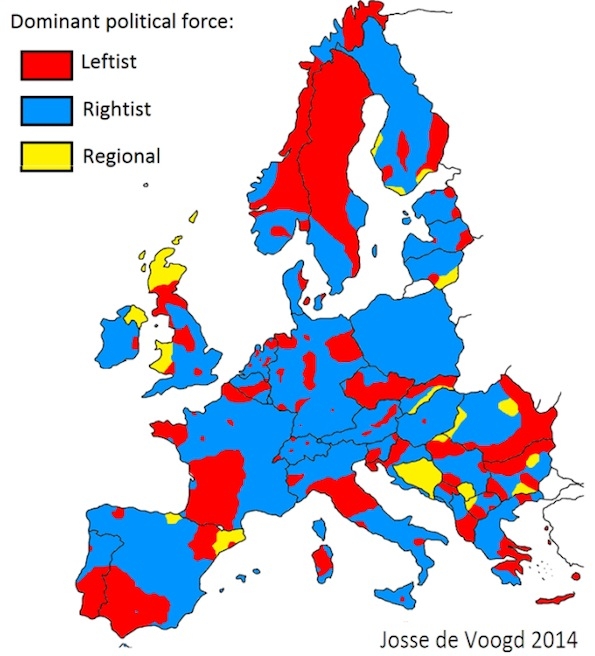
Well, the short answer is clearly "no"; we will not see a UKIP government any time soon. However, they did very well in both the Local Council elections, and the European elections in May 2014. The results of the EU vote in the UK reflect results across Europe with anti-european parties being very popular.
Picture Credit: The Economist.

In the EU elections, they came first with over 4 million votes, which is the first time that neither the Conservatives or Labour have won an election. Analysis here from the Economist's "Blighty blog".

Results can be found on the links above. Nick Robinson has some interesting things to say about UKIP; it can be argued that UKIP has a big support, but EU elections results do not equate to general election results. The Telegraph's columnist has this - essentially, the election is a loss for all parties (as a side note, he also blames things like the colapse of the support for the main political parties).

As G and P students will know, FPTP means that it is very difficult for Farage and co to get seats in the Commons, although former leader Lord Pearson is demanding more seats for the party in the Lords.

There was a by-election in Newark, which went with the Conservatives, but with a reduced majority against UKIP. Somewhat predicably, the Telegraph sees it as a sign the Conservatives will win in 2015.

All of which is useful for any G and P student of Unit 1 contemplating the importance of minor parties in the UK system, and especially whether we are a 2 or 3 or 4 party country.

Also significant is the impact all this is having the traditional 3rd party, the Lib Dems; generally their performance in these elections has been dismal. There are calls for Nick Clegg to go, and even a botched attempt to force him out in favour of Vince Cable. The main problem is that the Lib Dems have been the traditional party of protest, and in government they just can't fulfil that role.

Elsewhere, the Telegraph's columnist blamed politicians who don't sound like human beings, but are obsessed by staying on message. The outcome is that the public don't trust them, or ultimately vote for them. Again - this is a familiar theme in Unit 1.

Thursday, 8 May 2014

UK Political Parties - ideologies over time

While looking for something else I've come across a great site which goes into political ideologies of the UK parties (great for anyone revising / studying the topic for Unit 1).

Rather than simply use the traditional left-right division, the site adds in measure of authoritarianism vs libertarianism.

Here is a great page which shows how the 3 main parties have changed ideologies over time and in different elections.

Political Parties and their ideologies.
Picture credit: The Political Compass 
There is also a test you can take to find out how you fit into this chart; are you more like Ghandi or Stalin?

Perhaps for a bit of light relief, it is worth-while watching Nick Clegg saying "Sorry" for misleading the electorate about student fees before the 2010 election. This time, someone made him sing via autotune:


Saturday, 1 March 2014

Private Members Bill

This briefly caught my ear on the radio from Friday: a Conservative MP proposing in a Private Members' Bill that face coverings (such as the balaclava and the Muslim veil) be banned.

Clearly not a bill that was going to go anywhere, and coverage was scant - BBC's "Yesterday in Parliament", Parliament's web-site and, um, the Express. The Bill got to the "Second Reading" in the bill-passing process.

Good for Gov and Pol students wanting examples of Private Members' Bills, and arguably an indication of the sort of thing which gives Conservatives a certain kind of reputation.

Tuesday, 31 December 2013

Tuesday, 17 December 2013

New political alignments in the UK? The death of Party politics as we know it... Jim.

A "fantasy Westminster", with a 1904 proposed design
for an Imperial Hall. Photo credit: NGCA 
I've just come across a fascinating piece in the Economist by the Bagehot columnist about the nature of party politics in the UK; very useful for any G & P student contemplating the nature of the UK's political parties, factions in parties and participation in politics. 

In essence, the piece describes the current three main political parties as "crumbling". It refers to the changing political alignment of society; party politics as we know it today does not represent the different parts of society.

For example, there is a segment of the working class who have some sympathy with policies from both Conservative and Labour:

 But such voters transcend the right/left and big-state/small-state divide. They dislike out-of-work welfare and are socially conservative, but approve of interventionist, and potentially expensive, industrial and housing policies, so are by no means "economically conservative". They could potentially join a coalition on the left, or one on the right.

In turn the piece critiques work by Conservative blogger Tim Montgomerie in the Times (paywall) who suggested some new alignments.

All of which may suggest yet another reason why participation in party politics is declining - the parties as they exist today are unable to represent the different views of society effectively.

An earlier piece by the same blogger in the Economist, drawing on the experience of Europe, suggested these new parties, and I think it is worth quoting in full:

Christian Democrats (c.30% support)
  • Core agenda: Pro-business, institutional conservatism, support for families
  • Voters: Middle- and upper-classes in suburban and rural areas
  • Would draw on: Conservatives, Lib Dems
  • Foreign corollaries: CDU (Germany), Moderates (Sweden)
  • Possible leaders: David Cameron, Ken Clarke, Jesse Norman
Social Democratic Party (c.30% support)
  • Core agenda: Progressive taxation, industrial activism, vocational training
  • Voters: Working- and middle-classes in urban and suburban areas
  • Would draw on: Labour, Lib Dems
  • Foreign corollaries: SPD (Germany), Social Democrats (Sweden), NDP (Canada)
  • Possible leaders: Ed Miliband, Andrew Adonis, Vince Cable
Free Liberals (c.15% support)
  • Core agenda: Cutting taxes, pro-immigration, social liberalism
  • Voters: Younger, urban, middle- and upper-class voters
  • Would draw on: Lib Dems, Conservatives, Labour
  • Foreign corollaries: FDP (Germany), VVD (Netherlands)
  • Possible leaders: George Osborne, Nick Clegg, Peter Mandelson
People's Party (c.15% support)
  •  Core agenda: Living costs, curbing immigration, social conservatism
  • Voters: Older working- and lower-middle-class voters in post-industrial areas
  • Would draw on: Labour, Conservatives, UKIP
  • Foreign corollaries: Die Linke (Germany), Socialist People's Party (Denmark)
  • Possible leaders: Jon Cruddas, Robert Halfon
National Party (c.10% support)
  • Core agenda: Socially conservative, small-state, anti-immigration
  • Voters: Older middle-class and upper-class voters
  • Would draw on: Conservative Party, UKIP
  • Foreign corollaries: True Finns (Finland), Lega Nord (Italy)
  • Possible leaders: Nigel Farage, Liam Fox 
 

Sunday, 18 August 2013

Political Party Size & Pressure Groups

In brief, according to the Daily Telegraph, the number of registered members of the Conservative Party have fallen significantly to under 100,000, and according to the Conservative Home web-site, this is 58,000. This figure is the lowest since WW2.

By contrast, Labour has gone from 156,000 to 188,000 between 2009 and today.

Neither figures are great for the two big parties in UK politics, and this ties in nicely with a key issue that is dealt with in Unit 1; partisan dealignment and the fall in participation in politics.

Pressure Groups

Also, while I am thinking about it, the anti-Fracking protests in Sussex over the Summer are great examples of Pressure Group action. Students studying Unit 1 should certainly be thinking of using events like these in their essays.

[Picture credit - BBC News]