Further to news about Conservative MP Douglas Carswell's defection to UKIP, the Economist has just published a video where he discusses reform of the UK's political system. Specifically he talks about how the two main political parties are not modern enough and require members to support all policies. He favours a "Spotify" approach where voters could pick-and choose more.
The video won't embed effectively, so click on the link to get to the video.
Great stuff for any G and P student contemplating reform of the UK political system or of the political parties in Unit 1
Showing posts with label UKIP. Show all posts
Showing posts with label UKIP. Show all posts
Monday, 1 September 2014


Sunday, 20 July 2014
New events in UK politics over the Summer
Briefly and in no particular order, David Cameron did a cabinet reshuffle which saw some big-hitters such as Education Secretary Michael Gove and Foreign Secretary William Haig losing their jobs. Marginally more women are now in Cabinet than before, and this is certainly an attempt to give the Conservative Party the edge in the lead-up to the 2015 election.
Labour has plans to re-nationalise the rail system (a throw back to Old Labour perhaps?).
The House of Lords has a debate about assisted-dying, although there is no likelihood of it becoming law. This highlights the importance of the Lords in debating issues.
The only woman Muslim in the Cabinet, Baroness Warsi resigns over the government's policy on the fighting in Gaza. A blow for Cameron, and there may be an impact on his policies and his own power. The Economist analyses the resignation here.
As a follow on, Boris Johnson has finally admitted that he is interested in fighting for a seat in the Commons in the 2015 election. If successful, he will be an MP and the London Mayor, at least for a brief period. At the end of August he finally confirmed that he will contest the seat of Uxbridge.
There was a debate about Scottish independence between the Scottish First Minister Alec Salmond and Alistair Darling, former Labour Chancellor. Highlights are below. Both sides have declared victory, although the vote itself will tell the truth. Analysis from the Economist here.
The Independence second debate between Salmond and Darling was interesting; fewer one-liners but Salmond came out on top and by a large margin "won" 71% to 29%. Worth bearing in mind that this "snap" polling is more about performance on the night rather than any change in intension to vote. Great analysis from the BBC's Nick Robinson here. More from the Economist here. Useful stuff for anyone contemplating the importance of referendums and the prospect for constitutional change in the UK. In addition, Cameron has promised more powers to the Scottish Parliament should the vote be "No".
Gov and Pol students contemplating the House of Lords would find recent news useful. Despite the Lords being too full for the facilities, and being the second largest legislative chamber in the world, 22 new peers have been appointed, including TV star Karen Brady. The Lords currently stands at 796 members.
More problems for David Cameron (useful for any student contemplating the Conservative Party's political stance) in the shape of a Tory MP who has defected to UKIP and resigned from his seat. More from Nick Robinson here. The very short version is that it exposes the Tory party as one which is obsessed by the EU and this has all sorts of implications including the rise of UKIP and perhaps increasing the likelihood that Scotland will vote "Yes" in September; the Scots being traditionally more pro-EU.
For no reason perhaps other than a reminder that Jeremy Paxman has been replaced on Newnight by Evan Davis, a brief clip from that esteemed show:
Labour has plans to re-nationalise the rail system (a throw back to Old Labour perhaps?).
The House of Lords has a debate about assisted-dying, although there is no likelihood of it becoming law. This highlights the importance of the Lords in debating issues.
The only woman Muslim in the Cabinet, Baroness Warsi resigns over the government's policy on the fighting in Gaza. A blow for Cameron, and there may be an impact on his policies and his own power. The Economist analyses the resignation here.
As a follow on, Boris Johnson has finally admitted that he is interested in fighting for a seat in the Commons in the 2015 election. If successful, he will be an MP and the London Mayor, at least for a brief period. At the end of August he finally confirmed that he will contest the seat of Uxbridge.
There was a debate about Scottish independence between the Scottish First Minister Alec Salmond and Alistair Darling, former Labour Chancellor. Highlights are below. Both sides have declared victory, although the vote itself will tell the truth. Analysis from the Economist here.
The Independence second debate between Salmond and Darling was interesting; fewer one-liners but Salmond came out on top and by a large margin "won" 71% to 29%. Worth bearing in mind that this "snap" polling is more about performance on the night rather than any change in intension to vote. Great analysis from the BBC's Nick Robinson here. More from the Economist here. Useful stuff for anyone contemplating the importance of referendums and the prospect for constitutional change in the UK. In addition, Cameron has promised more powers to the Scottish Parliament should the vote be "No".
Gov and Pol students contemplating the House of Lords would find recent news useful. Despite the Lords being too full for the facilities, and being the second largest legislative chamber in the world, 22 new peers have been appointed, including TV star Karen Brady. The Lords currently stands at 796 members.
More problems for David Cameron (useful for any student contemplating the Conservative Party's political stance) in the shape of a Tory MP who has defected to UKIP and resigned from his seat. More from Nick Robinson here. The very short version is that it exposes the Tory party as one which is obsessed by the EU and this has all sorts of implications including the rise of UKIP and perhaps increasing the likelihood that Scotland will vote "Yes" in September; the Scots being traditionally more pro-EU.
For no reason perhaps other than a reminder that Jeremy Paxman has been replaced on Newnight by Evan Davis, a brief clip from that esteemed show:
Saturday, 7 June 2014
UKIP - a contender for power?
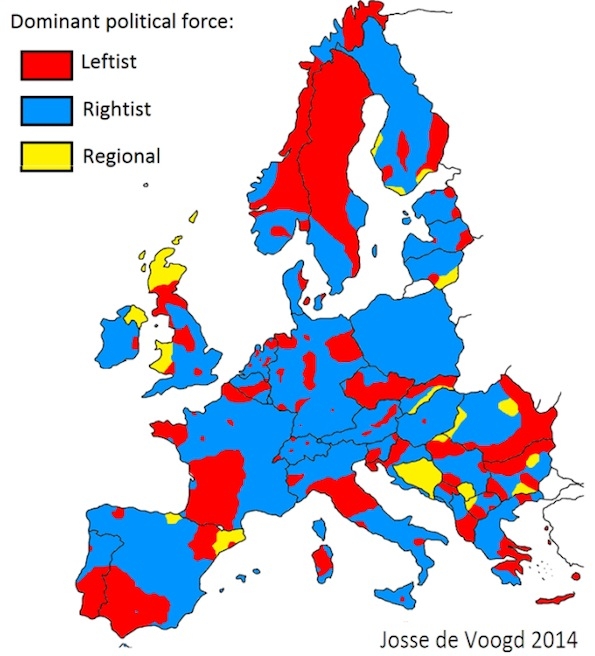
Well, the short answer is clearly "no"; we will not see a UKIP government any time soon. However, they did very well in both the Local Council elections, and the European elections in May 2014. The results of the EU vote in the UK reflect results across Europe with anti-european parties being very popular.
In the EU elections, they came first with over 4 million votes, which is the first time that neither the Conservatives or Labour have won an election. Analysis here from the Economist's "Blighty blog".
Results can be found on the links above. Nick Robinson has some interesting things to say about UKIP; it can be argued that UKIP has a big support, but EU elections results do not equate to general election results. The Telegraph's columnist has this - essentially, the election is a loss for all parties (as a side note, he also blames things like the colapse of the support for the main political parties).
As G and P students will know, FPTP means that it is very difficult for Farage and co to get seats in the Commons, although former leader Lord Pearson is demanding more seats for the party in the Lords.
There was a by-election in Newark, which went with the Conservatives, but with a reduced majority against UKIP. Somewhat predicably, the Telegraph sees it as a sign the Conservatives will win in 2015.
All of which is useful for any G and P student of Unit 1 contemplating the importance of minor parties in the UK system, and especially whether we are a 2 or 3 or 4 party country.
Also significant is the impact all this is having the traditional 3rd party, the Lib Dems; generally their performance in these elections has been dismal. There are calls for Nick Clegg to go, and even a botched attempt to force him out in favour of Vince Cable. The main problem is that the Lib Dems have been the traditional party of protest, and in government they just can't fulfil that role.
Elsewhere, the Telegraph's columnist blamed politicians who don't sound like human beings, but are obsessed by staying on message. The outcome is that the public don't trust them, or ultimately vote for them. Again - this is a familiar theme in Unit 1.
 |
| Picture Credit: The Economist. |
In the EU elections, they came first with over 4 million votes, which is the first time that neither the Conservatives or Labour have won an election. Analysis here from the Economist's "Blighty blog".
Results can be found on the links above. Nick Robinson has some interesting things to say about UKIP; it can be argued that UKIP has a big support, but EU elections results do not equate to general election results. The Telegraph's columnist has this - essentially, the election is a loss for all parties (as a side note, he also blames things like the colapse of the support for the main political parties).
As G and P students will know, FPTP means that it is very difficult for Farage and co to get seats in the Commons, although former leader Lord Pearson is demanding more seats for the party in the Lords.
There was a by-election in Newark, which went with the Conservatives, but with a reduced majority against UKIP. Somewhat predicably, the Telegraph sees it as a sign the Conservatives will win in 2015.
All of which is useful for any G and P student of Unit 1 contemplating the importance of minor parties in the UK system, and especially whether we are a 2 or 3 or 4 party country.
Also significant is the impact all this is having the traditional 3rd party, the Lib Dems; generally their performance in these elections has been dismal. There are calls for Nick Clegg to go, and even a botched attempt to force him out in favour of Vince Cable. The main problem is that the Lib Dems have been the traditional party of protest, and in government they just can't fulfil that role.
Elsewhere, the Telegraph's columnist blamed politicians who don't sound like human beings, but are obsessed by staying on message. The outcome is that the public don't trust them, or ultimately vote for them. Again - this is a familiar theme in Unit 1.
Tuesday, 21 January 2014
UKIP 2014 - becoming a laughing stock?
UKIP's popularity is analysed here in the Economist - essentially it has become the "protest" party of choice because the other political parties have become very similar. People are also upset because of the economic climate and the impact this has had on living conditions and jobs. In addition, UKIP is developing local support in a way not seen since the Lib Dems used the same tactic.
There is a similarity between the other populist parties of the right around Europe and UKIP, which admittedly is somewhat ironic. A good analysis of all the ins and outs can be found here, again in the Economist.
UKIP's progress from Pressure Group to an insurgent party trying to get votes in the next European election in May 2014 could be an essential ingredient in any G & P student's analysis of the power of small parties in Unit 1. However, the European elections are not the General election, and are not taken seriously by voters, which benefits fringe parties like UKIP. Also, the voting system will hold back UKIP from getting very many seats in Westminster (if any). Having said that, it is possible that they may get one or two seats if their local support is enough.
Recent UKIP-related news has made it seem a bit more of a laughing stock, although that may only be for the internet-savvy (UKIP-voters are less likely to be plugged into their electronic devices the way that younger voters are).
Firstly, a UKIP councillor said that recent wet weather can be blamed on God's reaction to Cameron's Gay Marriage policy, which got various reactions including from UKIP (which suspended him), a spoof Twitter account, and this very funny spoof weather-forecast:
Also the Daily Mash contributed the news story that "Married Gays to Tour Drought-hit Countries".
Although one can sneer at UKIP and its policies, former Prime Minister Harold MacMillan famously wrote to his Postmaster General (a Cabinet official in charge of telephones, wireless and TV) in 1962 to say that:
It is a good thing to be laughed at.
It is better than to be ignored.
There is a similarity between the other populist parties of the right around Europe and UKIP, which admittedly is somewhat ironic. A good analysis of all the ins and outs can be found here, again in the Economist.
UKIP's progress from Pressure Group to an insurgent party trying to get votes in the next European election in May 2014 could be an essential ingredient in any G & P student's analysis of the power of small parties in Unit 1. However, the European elections are not the General election, and are not taken seriously by voters, which benefits fringe parties like UKIP. Also, the voting system will hold back UKIP from getting very many seats in Westminster (if any). Having said that, it is possible that they may get one or two seats if their local support is enough.
Recent UKIP-related news has made it seem a bit more of a laughing stock, although that may only be for the internet-savvy (UKIP-voters are less likely to be plugged into their electronic devices the way that younger voters are).
Firstly, a UKIP councillor said that recent wet weather can be blamed on God's reaction to Cameron's Gay Marriage policy, which got various reactions including from UKIP (which suspended him), a spoof Twitter account, and this very funny spoof weather-forecast:
Also the Daily Mash contributed the news story that "Married Gays to Tour Drought-hit Countries".
Although one can sneer at UKIP and its policies, former Prime Minister Harold MacMillan famously wrote to his Postmaster General (a Cabinet official in charge of telephones, wireless and TV) in 1962 to say that:
It is a good thing to be laughed at.
It is better than to be ignored.
Tuesday, 31 December 2013
2013 in review - UK
Try this from the BBC about the Conservatives, and this about the Lib Dems, and this about the Labour Party. Also here is the Independent's take.
There was an interesting analysis about the Conservative / UKIP problem in the Guardian - should Cameron ignore them or pander to them?
The BBC has a review of the year in politics here.
There was an interesting analysis about the Conservative / UKIP problem in the Guardian - should Cameron ignore them or pander to them?
The BBC has a review of the year in politics here.
Friday, 10 May 2013
Recent events in British Politics - Revision
With the AS Unit 1 exam on the horizon, the time has come for a brief round-up of political issues that are or have been in the news and which may be useful / important to mention. Don't forget that high marks can be gained from using up-to-date examples whenever possible.
The recent 2013 local elections have given UKIP some local council seats and have made David Cameron's life harder. Full results are here, and analysis from the BBC's Nick Robinson is here.

Arguably UKIP's success has underlined the fact that the UK is now a 4-party system, rather than the two or three-party system of recently.
Good arguments to make when contemplating whether the UK should reform its democratic system or not.
Also - a good time to reflect that UKIP started life as a pressure group.
A recent example of a pressure group is Migration Watch which campaigns for greater control of immigration. At the end of April it reacted to news that up to 35000 Bulgarians may enter the UK when border restrictions are lifted at the end of this year. Migration Watch says the actual number may be double that. Their web-site has a press release, published yesterday, which says that 100,000 dependants of EU nationals entered the UK getting full access to UK benefits. The press release can be found here.
Immigration is a complex issue, but certainly contributed to the rise of UKIP's vote in the 2013 local council elections.

Another news story that caught my eye this morning was this news that a privately-run prison in London (Thameside Jail) has terrible conditions. The campaign group the Howard League for Penal Reform (i.e. prison reform) responded to this news here on their web-site, and took the opportunity to criticise government policy, especially the recent call for prisoners to do more productive activities while in jail in return for privileges like television.
Press releases like this add to a story, help journalists to put the news into context and help to put pressure on a government to react. The question is how much impact these individual actions have. Probably not much by themselves, but they help the democratic process by increasing pluralism.
[Picture Credits - Nigel Farage (top), HMP Thamesside (bottom)]
The recent 2013 local elections have given UKIP some local council seats and have made David Cameron's life harder. Full results are here, and analysis from the BBC's Nick Robinson is here.

Arguably UKIP's success has underlined the fact that the UK is now a 4-party system, rather than the two or three-party system of recently.
Good arguments to make when contemplating whether the UK should reform its democratic system or not.
Also - a good time to reflect that UKIP started life as a pressure group.
A recent example of a pressure group is Migration Watch which campaigns for greater control of immigration. At the end of April it reacted to news that up to 35000 Bulgarians may enter the UK when border restrictions are lifted at the end of this year. Migration Watch says the actual number may be double that. Their web-site has a press release, published yesterday, which says that 100,000 dependants of EU nationals entered the UK getting full access to UK benefits. The press release can be found here.
Immigration is a complex issue, but certainly contributed to the rise of UKIP's vote in the 2013 local council elections.

Another news story that caught my eye this morning was this news that a privately-run prison in London (Thameside Jail) has terrible conditions. The campaign group the Howard League for Penal Reform (i.e. prison reform) responded to this news here on their web-site, and took the opportunity to criticise government policy, especially the recent call for prisoners to do more productive activities while in jail in return for privileges like television.
Press releases like this add to a story, help journalists to put the news into context and help to put pressure on a government to react. The question is how much impact these individual actions have. Probably not much by themselves, but they help the democratic process by increasing pluralism.
[Picture Credits - Nigel Farage (top), HMP Thamesside (bottom)]
Friday, 16 April 2010
I agree with Nick... I agree with Nick
The general consensus is that Nick Clegg had a very good debate with Brown and Cameron for example, here and here - there is a debate to be had about how expectations can lead to a result (expectations of Clegg were by and large low so when he had a better debate than Cameron, who has been perceived as a great orator and debator, then he is the winner), or how the debate itself was hampered by a highly restrictive set of rules.
Overall, I think Clegg played the "I'm not the same as the other guys" line well. Cameron was good, but was hindered by over-cautiousness (being so concerned about making sure that he did not make a blunder that he lost most of his spontaneity and verve). Brown couldn't stop fidgeting, sounded too much like a bureacrat, and did not make eye-contact with the audience or the viewer. Better than expected then - as a result, he has been seen in some quarters as having a very good evening.
The key reason for bringing this all up is that it is unclear what impact these debates will have on the election. There is the possibility that a swing to the Lib-Dems (assuming nothing changes between now and the election - a very unlikely scenario) will impact key marginal constituencies which are Lib-Tory, but will have an uncertain effect on Lab-Lib marginals. Everything else being equal, left-leaning pro-LibDem voters will put their tick in the box of whichever party will keep out the Tories.
Brown's shameless wooing of Clegg on prime-time TV shows how concerned he is by the prospect of a hung parliament to encourage LibDem voters to help Labour by ganging up on the Conservatives. It also reminds us of how close the two parties are in many ways given their history, and recent policies (see my previous post for links).
In terms of G&P students, all useful stuff for any question asking about how minor parties can increase their support / vote / profile (go on the TV in prime-time debating with the leaders of the two biggest parties and do well).
Don't forget, of course, there are the other national TV debates too, in which the multi-party systems of the Welsh Assembly and the Scottish Parliament get to face up against eachother. Again, more publicity and coverage (not to mention equal billing) for smaller and minor parties.
Nor should I ignore the BNP's invitation to appear on Question Time earlier in the year - as a result of a seat in the European elections they have become a party representing a constituency so their ideas should be tested in a public forum. Again - a minor party gains a seat that in turn helps to increase their profile, which may lead to more votes.
That's not to ignore the very serious possibility that the BNP benefited in the European elections from an anti-politics mood among voters in the UK. In this election this mood is likely to benefit UKIP too, that is if Nick Clegg can't be the anti-politician politician.
Overall, I think Clegg played the "I'm not the same as the other guys" line well. Cameron was good, but was hindered by over-cautiousness (being so concerned about making sure that he did not make a blunder that he lost most of his spontaneity and verve). Brown couldn't stop fidgeting, sounded too much like a bureacrat, and did not make eye-contact with the audience or the viewer. Better than expected then - as a result, he has been seen in some quarters as having a very good evening.
The key reason for bringing this all up is that it is unclear what impact these debates will have on the election. There is the possibility that a swing to the Lib-Dems (assuming nothing changes between now and the election - a very unlikely scenario) will impact key marginal constituencies which are Lib-Tory, but will have an uncertain effect on Lab-Lib marginals. Everything else being equal, left-leaning pro-LibDem voters will put their tick in the box of whichever party will keep out the Tories.
Brown's shameless wooing of Clegg on prime-time TV shows how concerned he is by the prospect of a hung parliament to encourage LibDem voters to help Labour by ganging up on the Conservatives. It also reminds us of how close the two parties are in many ways given their history, and recent policies (see my previous post for links).
In terms of G&P students, all useful stuff for any question asking about how minor parties can increase their support / vote / profile (go on the TV in prime-time debating with the leaders of the two biggest parties and do well).
Don't forget, of course, there are the other national TV debates too, in which the multi-party systems of the Welsh Assembly and the Scottish Parliament get to face up against eachother. Again, more publicity and coverage (not to mention equal billing) for smaller and minor parties.
Nor should I ignore the BNP's invitation to appear on Question Time earlier in the year - as a result of a seat in the European elections they have become a party representing a constituency so their ideas should be tested in a public forum. Again - a minor party gains a seat that in turn helps to increase their profile, which may lead to more votes.
That's not to ignore the very serious possibility that the BNP benefited in the European elections from an anti-politics mood among voters in the UK. In this election this mood is likely to benefit UKIP too, that is if Nick Clegg can't be the anti-politician politician.
Subscribe to:
Posts (Atom)