This briefly caught my ear on the radio from Friday: a Conservative MP proposing in a Private Members' Bill that face coverings (such as the balaclava and the Muslim veil) be banned.
Clearly not a bill that was going to go anywhere, and coverage was scant - BBC's "Yesterday in Parliament", Parliament's web-site and, um, the Express. The Bill got to the "Second Reading" in the bill-passing process.
Good for Gov and Pol students wanting examples of Private Members' Bills, and arguably an indication of the sort of thing which gives Conservatives a certain kind of reputation.
Showing posts with label Parliament. Show all posts
Showing posts with label Parliament. Show all posts
Saturday, 1 March 2014


Tuesday, 11 February 2014
Smoking in Cars
In brief, yesterday there was a vote in Parliament which has given Ministers the power to ban smoking in cars with young children.
It started with a vote in the Lords that was passed by the Labour party against the government's opposition. It then became an amendment to the Children and Families Bill which is designed to change and improve certain aspects of family law and adoption.
Full details here in this BBC article.
Interesting for G and P students because it illustrates nicely some of the ways in which Parliament does its job of calling government to account and suggesting and passing laws - government is now accepting that this power will become law before 2015 where it had previously not done so.
It also is a useful case study in the power of pressure groups - it was supported by the BMA (which has campaigned on this issue since 2011) and the British Lung Foundation, but opposed by the smoking group Forest.
As a side note - some of the opposition to the stopping of smoking in cars with children is about the invasion of civil liberties, and also the difficulty in enforcing the ban. A Guardian article from 2008 illustrates that opposition to using seat-belts back in the 1970s had similar arguments.
Here is the British Lung Foundation's ad about the issue:
It started with a vote in the Lords that was passed by the Labour party against the government's opposition. It then became an amendment to the Children and Families Bill which is designed to change and improve certain aspects of family law and adoption.
Full details here in this BBC article.
Interesting for G and P students because it illustrates nicely some of the ways in which Parliament does its job of calling government to account and suggesting and passing laws - government is now accepting that this power will become law before 2015 where it had previously not done so.
It also is a useful case study in the power of pressure groups - it was supported by the BMA (which has campaigned on this issue since 2011) and the British Lung Foundation, but opposed by the smoking group Forest.
As a side note - some of the opposition to the stopping of smoking in cars with children is about the invasion of civil liberties, and also the difficulty in enforcing the ban. A Guardian article from 2008 illustrates that opposition to using seat-belts back in the 1970s had similar arguments.
Here is the British Lung Foundation's ad about the issue:
Tuesday, 10 September 2013
How parliament works
I stumbled across a great clickable guide to how parliament works on the BBC web-site.
Check it out here.
Here is a video guide to Parliament:
Check it out here.
Here is a video guide to Parliament:
Sunday, 1 September 2013
Syria - UK
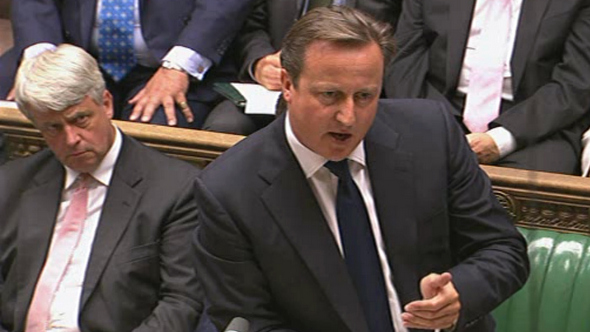
Fascinating stuff is going on in relation to the Syrian crisis, and while there is certainly great human misery there, G & P students should bear in mind the domestic political reaction to these events when contemplating aspects of Unit 1 and Unit 2. In the UK, PM David Cameron recalled Parliament to debate the possibility of taking military action. Parliament does not get recalled very often, and then only in an emergency.

Cameron also wanted permission to send military resources into action - not an invasion, but rather a highly limited bombing of selected targets.
Interestingly, he failed to win the vote, and has ended up with a decision in the House of Commons which has meant (at least in the reading of most commentators) that he will not be able to take any military action at all in Syria.
This is an event without precedent - no PM has lost a vote about foreign policy actions in the modern era. Cameron's ability to act is not severely curtailed, and perhaps this will mean that in future PMs will have a similar restriction on their actions. Is the power of the PM now much weaker? Possibly. A Telegraph report is here, the BBC's Nick Robinson's piece is here, and the Independent discusses it here.
Depending on who you read, there are many different opinions; Cameron certainly seems weaker, but according to the Telegraph, so is the Labour leader Ed Miliband, who was thinking about domestic political advantage rather than about how to help dead Syrians. The normally left-leaning Guardian has a piece which says Miliband was weak too.
The Sun posted an obituary of the "Special Relationship", which I thought was rather funny (sadly I'm not able to show the picture here). There certainly are implications for Britain's status in the world, although this is rather beyond the G & P syllabus.
The Economist's Blighty Blog discusses the whole thing here.
[Picture - The Economist]
Cameron also wanted permission to send military resources into action - not an invasion, but rather a highly limited bombing of selected targets.
Interestingly, he failed to win the vote, and has ended up with a decision in the House of Commons which has meant (at least in the reading of most commentators) that he will not be able to take any military action at all in Syria.
This is an event without precedent - no PM has lost a vote about foreign policy actions in the modern era. Cameron's ability to act is not severely curtailed, and perhaps this will mean that in future PMs will have a similar restriction on their actions. Is the power of the PM now much weaker? Possibly. A Telegraph report is here, the BBC's Nick Robinson's piece is here, and the Independent discusses it here.
Depending on who you read, there are many different opinions; Cameron certainly seems weaker, but according to the Telegraph, so is the Labour leader Ed Miliband, who was thinking about domestic political advantage rather than about how to help dead Syrians. The normally left-leaning Guardian has a piece which says Miliband was weak too.
The Sun posted an obituary of the "Special Relationship", which I thought was rather funny (sadly I'm not able to show the picture here). There certainly are implications for Britain's status in the world, although this is rather beyond the G & P syllabus.
The Economist's Blighty Blog discusses the whole thing here.
[Picture - The Economist]
Subscribe to:
Posts (Atom)