Contributors

Thursday, 10 October 2013

Congress procedure and the Republican Party

I just came across another great article from RollingStone Magazine - this time it concentrates on the inner workings of the Republican Party. Although probably more for political obsessives than G & P students it does contain some great nuggets.

I thought it was worth a separate post because it discusses representation in the House, and it uses as an example a House Representative from the Tea Party wing of the Republican party, Justin Amash:

Rep. Justin Amash.
Image: Wikimedia Commons
He has a wide following on social media, which he uses to communicate directly with his constituents, explaining every vote he casts, in detail, on his Facebook page. Mostly, Amash votes no – including 136 times against the Republican Party line. Visiting the congressman that afternoon in his office – decorated with a framed poster of Ayn Rand – I ask him how he can so casually defy leadership. "Why be for leadership?" Amash asks. "It's more popular in your district to be against leadership. Better just to vote your constituency."
 Great for using as an example in Unit 4C when discussing Congressional representation.

The article also discusses at length the how the Tea Party wing of the Republican Party has essentially taken over, by creating a separate group in Congress it calls the Republican Study Committee, which has 174 of 232 House Republicans. This is the group who is apparently running the show when it comes to the current budget crisis.

Specifically this would be a useful example when discussing the different factions of the two political parties.

The article also goes on to describe how otherwise loyal republicans are now branded "RINOS" (Republicans in Name Only), even if they have been given a 97% loyal rating by the American Conservatives Union - the example given is House Rules Committee Chair Pete Sessions.

A final area which G & P students should find useful is how the removal of "pork barrel" spending (a subject of a 15-mark question in Unit 4C) has meant that the leadership of the parties (or specifically in this case the Republicans) have much less leverage over their members.

Few!

Monday, 7 October 2013

13 Reasons why the US government isn't working

Fig 1 - Filibusters and Cloture motions 1917-2012.
Source - washingtonpost.com
I've just come across this article in the Washington Post. It details 13 reasons the US government isn't working. 

Although a round-up of the usual suspects, it is a pretty useful run-down of a variety of causes, including the polarization of the political parties (the graph below shows this pretty well), the Tea Party, gerrymandering in the House and the filibuster.

The conclusion it comes to is pretty startling, but on the whole, a very useful article for anyone contemplating the US government, Congress and the power of the President in unit 4C.
Fig 2 - Average party political position
Source - washingtonpost.com

In a long article in the New York Review of Books, Elizabeth Drew discusses the impact that low turnout has had on US politics - the short version is that it has encouraged the extremist wings of the parties to get out the vote and this in turn has made the political system more polarized. It does have some extraordinary tales of political skulduggery, but in general it has some of the same thrust as the earlier post in the Washington Post.

Esteemed economist Paul Krugman in the Washington Post describes the Republican Party "incompetence", and links to a review of a book by Mann and Ornstein called "It's even worse than it looks". G & P students may have come across the idea of Congress as "the Broken Branch" - these are the two authors who came up with the phrase. They have some very unpleasant things to say about the Republicans:

Today’s Republicans in Congress behave like a parliamentary party in a British-style parliament, a winner-take-all system. But a parliamentary party — “ideologically polarized, internally unified, vehemently oppositional” — doesn’t work in a “separation-of-powers system that makes it extremely difficult for majorities to work their will.”

Food for thought, and probably essential reading for the 2013 exams.

Update - 10th October 2013

RollingStone Magazine has published a very long article putting the current division between political parties into historical context. Essential reading for anyone contemplating the different party positions for Unit 3C, and because it explains some of the finer points of the debt crisis.


Tuesday, 1 October 2013

US government shut-down

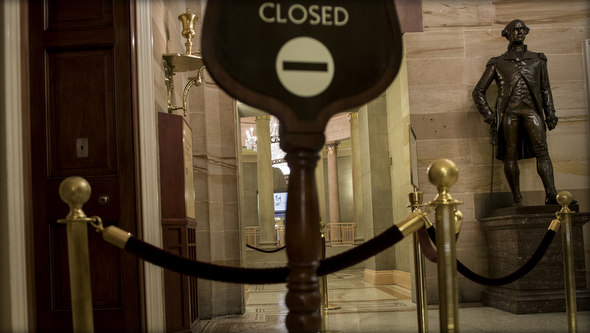
Well, the big news is that the US government has shut down because the two chambers of Congress could not come up with a solution to the budget problems that satisfied everybody.
Picture source: The Economist. 

The argument essentially was that the Republicans (or even more specifically the Tea-Party wing) wanted to delay, or overturn or defund Obamacare, and the Democrats said they couldn't.

There are a whole lot of different topics in G & P units 3C and 4C which could use this event as an example; the power (or inadequacy) of Congress, the power of the President, Political parties and their factions, not to mention the Supreme Court which upheld Obamacare in the face of challenges to it.

Interesting commentary from the Republican-leaning Washington Post which blames the Tea Party for having no grasp of political reality. Elsewhere on the Washington Post web-site there is older analysis which says that this plays into the hands of the Democrats and President Obama, as does this post.

The Economist's Democracy in America blog has a piece here about the political implications of the shut-down.

The BBC's Robert Peston has analysis of the economic impact of this.

Update:

The Huffington Post has a poll of polls which says that thanks to the Government shut-down the Republican Party is losing support and is in danger of losing the House in the Mid-terms next year. This may or may not have an impact on the shut-down itself; the Republican Party may decide to suspend the shut-down or it may decide to keep squeezing.

The decision on the debt ceiling will have to be made by 17th October or there is a risk that the US government will default on its debt.

Wikipedia's article on the subject can be found here.

Sunday, 29 September 2013

Congress, Government shutdown and Healthcare in USA

There is a possibility that the current budget crisis in the USA will lead to a government shut-down. The Economist has a long piece about it, here (although this may not be available to all). The issue is the Republicans are refusing to sign a new budget for the year ahead with funding for Obamacare. The Democrats are refusing to pay ball and, because both parties control a chamber of Congress, there is gridlock on the issue.

The BBC's Mark Mardell discusses it here.

One of the oddest recent parts of the debate was a 21-hour speech in the Senate by Ted Cruz (R) who was trying to stop a vote. For various technical reasons it was not a filibuster, but is a great example of the genre for G & P students studying Congress for Unit 4C. The highlight (if that's the right word) was the few moments the Senator devoted to reading Dr Seuss's "Green Eggs and Ham".


The BBC has a Q & A about the issue here.

If the issue hasn't been resolved by 1st October, the US government will shut down until a budget is agreed. We'll see what happens.

Saturday, 28 September 2013

Ed Miliband and the Labour Party - Going left wing?

In brief, before I get round to dealing with Ed Miliband's recent speech at the Labour conference, the "Blighty" blog at the Economist has an interesting article summarising the Labour Leader's approach: not left-wing, but something much more nuanced.

Essentially, he has to build a coalition of voters who have very difference and mixed opinions on issues, and don't fit into a simple left-right scale.

Interestingly, and very useful for Units 1 & 2, is his announcement of an intention to lower the voting age to 16. This is a useful point to bear in mind when contemplating voting reform in the UK; mind you it may well not be an entirely self-less act. A quote attributed to Churchill goes something like this:

"Any man who is under 30, and is not a liberal, has not heart; and any man who is over 30, and is not a conservative, has no brains."

The Huffington Post has a list of his announcements here.

Tuesday, 10 September 2013

How parliament works

I stumbled across a great clickable guide to how parliament works on the BBC web-site.

Check it out here.

Here is a video guide to Parliament:

Friday, 6 September 2013

Syria - US Congress

The Syrian crisis continues, but for G & P students there are some useful examples of Congress in action; Congress's vote on military action will happen soon, but there have been some developments.

First the Senate Foreign Relations Committee, an important body in the politics of these things, has supported military action. This is a good example of a Senate committee in action.

In addition, members of the Senate and the House are going around their constituents having "town hall" meetings to discuss the issue, as explained in this long piece by CBS News. Overwhelmingly, it seems that Americans are against military action - this does pose questions about the nature of representation by members of Congress; are they simply going to vote no because their constituents say so, or are they going to support Obama's view that it is in the nation's interest?

A classic Unit 4C question asks how representative Congress is - the events here are very relevant for this argument.

The BBC's man in Washington has a piece about it here - the implications could be profound for the political power of President Obama should he lose the vote next week.

[Picture - BBC News]

Sunday, 1 September 2013

Syria - USA

The Syrian crisis is having an effect on the politics of the USA - President Obama won't have the military support of Britain, thanks to a recent vote in the House of Commons. Rather interestingly, he is trying to get a vote in Congress to support military action. The Independent makes the link between Obama's action and Cameron's failure to get a similar vote in the House of Commons, which I think is a bit of a stretch. The BBC's Mark Mardell has a piece about it here.

As A2 G & P students will know (or they will find out when they get to it in the syllabus), the President is the Commander in Chief of the armed forces in the USA, and doesn't need permission from anybody to send troops anywhere. There is a tension between this and Congress's power to declare war (last done after Pearl Harbor), and the War Powers Resolution of 1973. Presidents generally get permission for longer military engagements at some point, as President George W Bush did in 2002 in Iraq, but Obama did not in Libya in 2011 (although he claimed action there was legal because it was done through NATO and the US relationship with NATO was long-standing).

The vote (probably going to happen on 9th Sept) should certainly be a good example for any G & P student contemplating Presidential power and foreign policy, a regular topic in the Unit 4C paper.

Fox News has a blog post about Presidential power over foreign policy here.

[Picture - The Economist]

Syria - UK

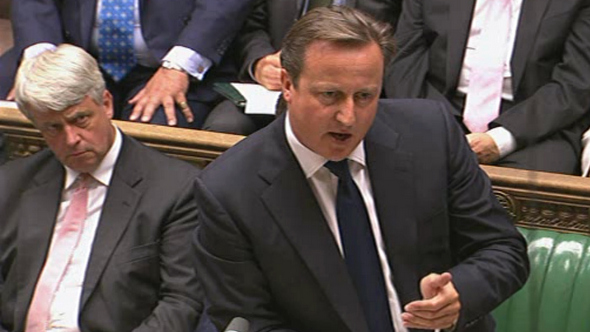
Fascinating stuff is going on in relation to the Syrian crisis, and while there is certainly great human misery there, G & P students should bear in mind the domestic political reaction to these events when contemplating aspects of Unit 1 and Unit 2. In the UK, PM David Cameron recalled Parliament to debate the possibility of taking military action. Parliament does not get recalled very often, and then only in an emergency.

Cameron also wanted permission to send military resources into action - not an invasion, but rather a highly limited bombing of selected targets.

Interestingly, he failed to win the vote, and has ended up with a decision in the House of Commons which has meant (at least in the reading of most commentators) that he will not be able to take any military action at all in Syria.

This is an event without precedent - no PM has lost a vote about foreign policy actions in the modern era. Cameron's ability to act is not severely curtailed, and perhaps this will mean that in future PMs will have a similar restriction on their actions. Is the power of the PM now much weaker? Possibly. A Telegraph report is here, the BBC's Nick Robinson's piece is here, and the Independent discusses it here.

Depending on who you read, there are many different opinions; Cameron certainly seems weaker, but according to the Telegraph, so is the Labour leader Ed Miliband, who was thinking about domestic political advantage rather than about how to help dead Syrians. The normally left-leaning Guardian has a piece which says Miliband was weak too.

The Sun posted an obituary of the "Special Relationship", which I thought was rather funny (sadly I'm not able to show the picture here). There certainly are implications for Britain's status in the world, although this is rather beyond the G & P syllabus.

The Economist's Blighty Blog discusses the whole thing here.

[Picture - The Economist]

Friday, 30 August 2013

Trolling and Pressure Groups in the USA

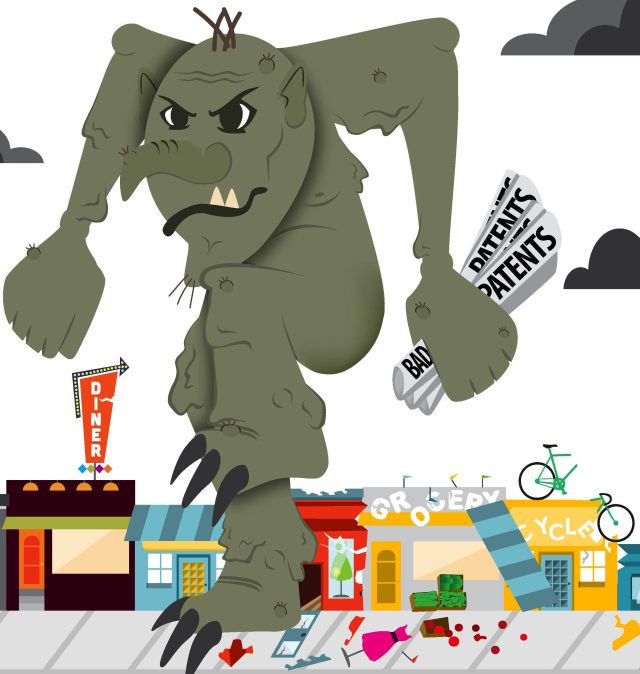
The magazine Ars Technica has a report about a pressure group called "Stop Bad Patents" which is starting a new campaign to get Congress to stop "Patent Trolling" - companies which buy up patents and then sue other businesses for using these patents. The trouble is that while the action can be seen as entirely spurious, it is generally cheaper to settle than to go through the courts.

The Pressure Group's web site can be found here.

[Picture - Ars Technica]

Sunday, 18 August 2013

Political Party Size & Pressure Groups

In brief, according to the Daily Telegraph, the number of registered members of the Conservative Party have fallen significantly to under 100,000, and according to the Conservative Home web-site, this is 58,000. This figure is the lowest since WW2.

By contrast, Labour has gone from 156,000 to 188,000 between 2009 and today.

Neither figures are great for the two big parties in UK politics, and this ties in nicely with a key issue that is dealt with in Unit 1; partisan dealignment and the fall in participation in politics.

Pressure Groups

Also, while I am thinking about it, the anti-Fracking protests in Sussex over the Summer are great examples of Pressure Group action. Students studying Unit 1 should certainly be thinking of using events like these in their essays.

[Picture credit - BBC News]

Presidential Power & Pressure Groups

In brief, the amount of power the President has is a regular and key question at A2; recent events have served to highlight the limits to that power, and to demonstrate how far the President can act in foreign policy before being called to account.

US Private Bradley Manning's leaks, and those of Edward Snowden have highlighted how far the US government (eg the NSA) has broken US law through surveillance of US and other activities, such as the one called "Operation Prism", which started under President Bush Jr. Interestingly, it took the actions of these individuals to bring attention to the issues at stake, and now there are various court cases going on prosecuting these individuals.

The New Yorker has an article which  highlights the US government's security operation and says that it has sinister intent; specifically, the prosecutions are not against dubious government actions, but against the leakers.

Arguably in this case, President Obama has carte-blanche to act in the way that his administration are doing as his actions are not being probed by the other branches of the US system.

Pressure Groups

A Pressure Group story caught my eye; that Netflix has taken advantage of the US Supreme Court's decision "Citizens United v FEC" and set up a political action committee, a "SuperPAC", which is designed to support political candidates who share their ideas about media and the internet. Their group is called "FLIXPAC".

Thursday, 1 August 2013

Pressure Groups and Judicial Review in the UK

As the Summer holiday continues, there have been two recent court cases which illustrate in one way or another the relationship between the judiciary and the law-makers in the UK.

Probably useful for G&P students in unit 2, although any question about pressure groups should probably mention this too.

3 terminally-ill men requested the right to die, and their battle went all the way to the Supreme Court. Most of their case was rejected; details can be found here on this BBC page. The BBC's health correspondent has a blog posting about it here.

The Lord Chief Justice, Lord Judge, said this:
In the judgement, the Lord Chief Justice Lord Judge said Parliament represented "the conscience of the nation" when it came to addressing life and death issues, such as abortions and the death penalty.
"Judges, however eminent, do not: our responsibility is to discover the relevant legal principles, and apply the law as we find it."
In other words, the Supreme Court in the UK is very different to that of the US; in the UK the court is not prepared to pass laws from the bench, whereas in the US, the Supreme Court is prepared to make judgements which have the effect of law-making.

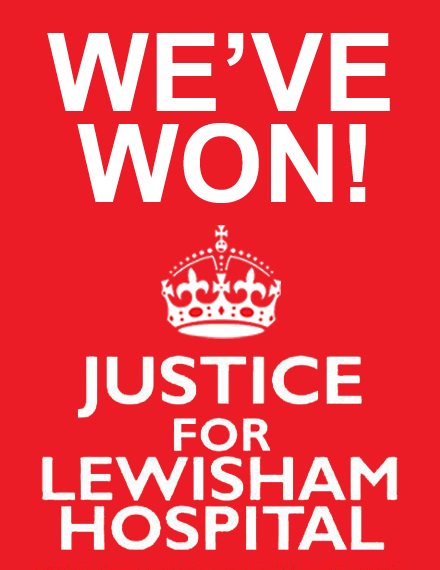
Another case which caught my eye is where a pressure group went to court to stop the closing of a hospital. Lewisham hospital in SE London will not close, thanks to the effort of the group "Save Lewisham Hospital". The government is probably going to appeal the decision, but for now it's a great example of a local pressure group taking action to change government policy.

[Picture Credit - Save Lewisham Hospital & BBC News]

Wednesday, 17 July 2013

The Death of Trayvon Martin - racial equality in America

One of the strands in Unit 3C is about Civil Rights in America, and specifically how far there is racial equality in America. The tragic death of Trayvon Martin, and the subsequent acquittal of the neighbourhood watchman who shot him, George Zimmerman has caused protest across America.

Any G&P student may be forgiven for thinking that the case is a simple matter; an unarmed black teenager walking in the rain to a relative' house is shot by an armed security officer in the street, who is let free by a system which sees African-Americans as inferior and prone to violence.

There is, however a more complex argument here; certainly there were faults, and the system "failed" Trayvon Martin (according to this article in the NY Times). Slate has an article here which discusses the over-reaction caused by the case.

I'm not sure yet that there is an easily digestible short-version of this, except to point out that the legal arguments were complex and can be easily caricatured. And to say that the experience of the case undoubtedly does ask how fair America is in racial terms, especially when considers the recent Supreme Court decision about the Voting Rights Act.

The Mirror has an article discussing racial inequality in America here.

Sunday, 14 July 2013

Gay marriage, Voting Rights and pressure groups

Briefly, as a follow-on to my previous post about the recent decisions in the Supreme Court, and after the success of the LGBT movement in getting the Supreme Court's decision on gay marriage, there are signs that the movement as a whole is going to focus on overturning the recent decision to nullify part of the Voting Rights Act.

An interesting article here from Rolling Stone Magazine.

Useful pressure group examples might be those mentioned in the article, the snappily-named "Queers for Economic Justice", and "Queer the vote", both of which in various ways are moving on from simply being focused on LGBT issues.

The latter, for example highlights the fact that the community they represent could be significant in an election:

The lesbian, gay, bisexual and transgender (LGBT) vote is sizable and bipartisan, and can be a swing vote in a close election.