Contributors

Saturday, 2 May 2015

Gay Marriage in USA

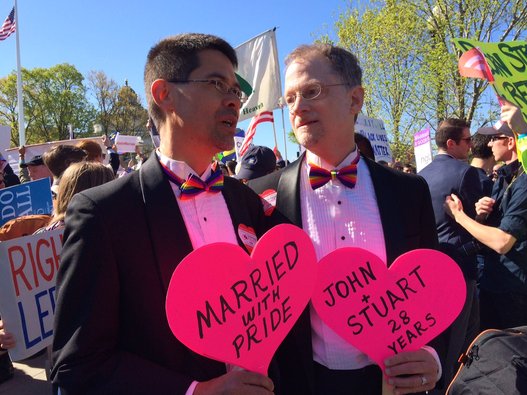
Protestors outside the Supreme Court.
Picture credit: Huffington Post 
The case Obergefell v Hodges was heard by the US Supreme Court earlier this week. This is the case asking the Court to force States to recognise the marriage of gay couples on other states. The couple in question (James Obergefell and John Arthur) went to court to get Ohio to recognise the marriage that took place in Maryland in 2013. John Arthur was terminally ill, and Obergefell wanted the state to recognise him as the spouce and beneficiary of Arthur's estate.

The Economist has a leader here about it - which explains the argument in favour (and also explains the argument againist). There is also an article about  the impact of the current situation, where marriage is legal in one state and not in another (pretty horrendous).

Of interest to G and P students in Unit 4C is the analysis that although it is likely to be an activist decision with Roberts and Kennedy in favour of Obergefell this unlikely to be as controversial as Roe v Wade:

Firstly Americans are increasingly in favour:
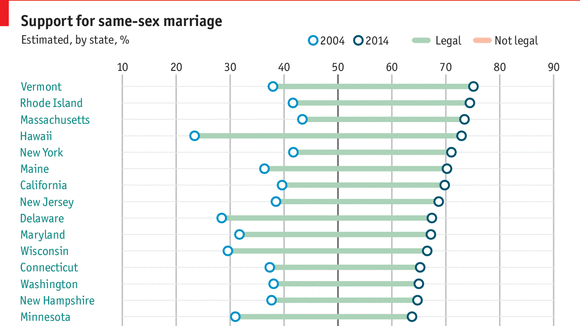
Picture Credit: The Economist


Also, to quote the leader:
the court ruled in Roe v Wade that it should be legal everywhere, citing a right to privacy that is nowhere mentioned in the constitution. This newspaper favours legal abortion, but in Roe the justices invented the law rather than interpreting it, substituting their preferences for those of voters.
The main argument against seems to be that the allowing of gay marriage across America should be left up to elected representatives to pass a law. The counter to that is that if it is not acceptable to practice discrimination of a, say, racist or sexist type under the constitution, it should also not be acceptable to discriminate against gays.

There is a great timeline in the LA times of the change in attitude of the USA to gay marriage here:

A timeline of the USA's support for gay marriage.
Picture Credit: LA Times
The decision is likely to be revealed in June.

Update July 2015: I forgot to update this in the light of the US Supreme Court decision in June, but worthwhile to record here the momentous decision by the Court that prevents Gay Marriage from being banned in States.  The court voted 5-4 with Kennedy siding with the liberal justices.

Wikipedia's page about the case, Obergefell v Hodges can be found here. The Scotus blog's summary can be found here.

The Atlantic tries to put this all into context here with a summary of the long battle for gay rights.
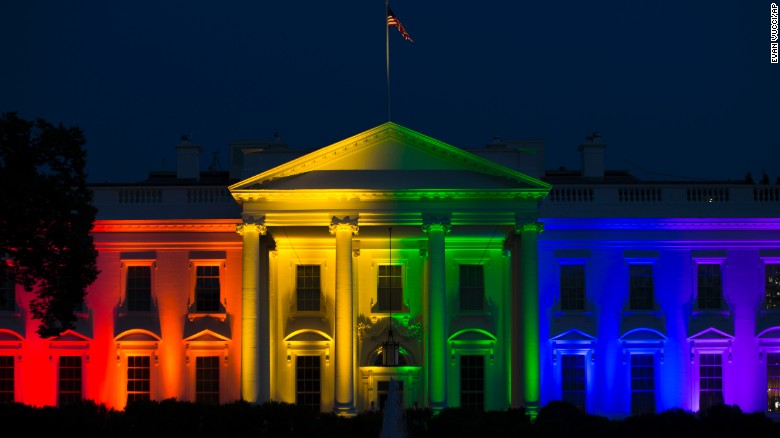
The White House celebrates the US Supreme Court decision.
Picture credit; CNN


Thursday, 30 April 2015

Life under AV?

A quick post - I've just come across a BBC news page which discusses what the political landscape might be like had the UK said "Yes" to AV in 2011.

Although in the 2010 election the Conservatives and Labour would have lost out and the Lib Dems would have gained 32. According to Lord Ashcroft it's possible that the 2015 polling data would show a Conservative victory.

Great stuff!

Saturday, 4 April 2015

The Leaders' debate, the electoral system, and the party system.

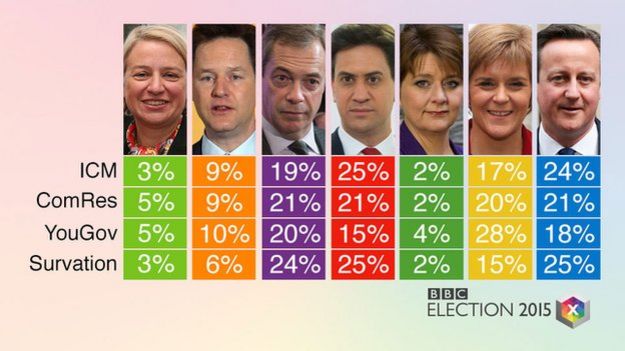
I'm not sure it tells us anything about the result, but the Leaders' debates served to show that the UK is really a multi-party system. Somewhat predictably, comments by Nigel Farage were later criticised. Snap polls after the debate show that the result is still close:

Picture Credit: BBC

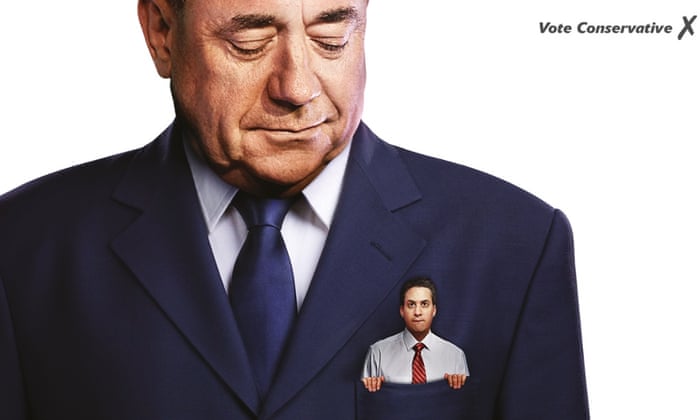
Picture credit: Conservatives / The Guardian

Perhaps most crucially 3 of these "minor" parties are now led by women.

In addition, it is no longer a 3-way battle for influence, the debate showed us that in the UK there are many parties which are claiming with some truthfulness that they represent a large portion of the population. As a result, the FPTP system is arguably now inadequate to the task of electing a stable government which can run Britain.

The likelihood of a major portion of the population feeling disenfranchised and left out is a real risk (imagine the effect on England of an SNP-Labour alliance in Westminster for instance). The Economist has a piece here which analyses the debate and reflects on the influence of the SNP.

SNP reply to Conservative poster. Credit: SNP / Herald Scotland
Analysis about the debate can be found here from the BBC, here from the Independent (which notes that the SNP's Nicola Sturgeon increased her support as a direct result of the debate), and the body-language is analysed here in the Guardian.

The Spectator analyses Cameron's prospects here (he did OK and didn't lose as badly as Miliband).

The Economist has a piece here about what the prospects are for Britain in the future (the TLDR summary is "not great").

For a bit of light relief, have a look at Buzzfeed's collection of the best jokes (eg. comparing the debate to a bad edition of "Take Me Out").

The whole thing can be watched here:


Or highlights can be found here:

Friday, 3 April 2015

Federalism and Indiana's law Religious Freedom - Gay rights

Indiana recently passed SB 101, or the "Religious Freedom Restoration Act", which allows individuals in Indiana to avoid civil rights legislation if they think that their own religious freedom is being "burdened". It has become controversial because it was passed by a Republican-dominated State Congress and has been seen by some, including the head of Apple, Tim Cook, as discriminatory against members of the LGBT community. Stopping discrimination against minority groups is one of the corner stones of Civil Rights legislation.

This is against the background of gay marriage being allowed (or at least not found to be unconstitutional) in the Supreme Court with US v Windsor in 2013, the Hobby Lobby decision of 2014 which allowed corporations to believe in God in order to avoid civil rights laws they don't like, and the rise in the Tea-Party wing of the Republican Party over recent years. 

Republican policy and the problem that this law in Indiana gives to the prospective Republican candidates is examined here in Rolling Stone Magazine (headline in a very aserbic piece: "GOP to LGBT, 'OMG you're still here?' ").

Both the Hobby Lobby case and US v Windsor should be on the list of cases any G and P student discusses in any essay on the Supreme Court and whether it is activist / conservative / liberal. 

The Indiana case is useful because it highlights the different traditions of states in a federal system, and also the policies of the Republican Party (good for Unit 3C). Good analysis here about the law in the Washington Post. There is clearly a clash here between Federal law and State law - one of the jobs the Supreme Court does is to referee arguments about such issues.

The Onion has a great headline which suggests the fix the law has caused for Republicans: "Indiana Governor Insists New Law Has Nothing To Do With Thing It Explicitly Intended To Do".

Presidential Foreign Policy - Obama and Iran

President Obama's recent negotiations with Iran and the rest of the "P5+1" (US, UK, France, Germany, China and Russia) have come up with a "historic" agreement to stop Iran from building a nuclear bomb. 

Certainly a good example to use when discussing the power of the president and foreign policy; however, there is still much work to be done and this is not actually an agreement as such. It is an agreement to continue working towards an agreement.

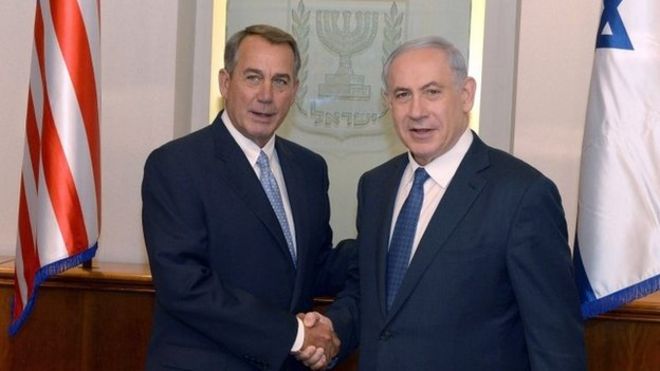
Of more use for any G and P student working towards Unit 4C is the idea that Congress can scupper the deal; Israeli Prime Minister Benjamin Netanyahu's speech to Congress essentially went over the head of the President and was an appeal to Congress (or more specifically the Republican-dominated Congress) not to allow Obama to leave Israel weakened.
Republican Speaker Boehner & Israeli PM Netanyahu.
Picture Credit: BBC

As a result, the President is likely to find it hard to get any Iran deal through Congress - although there may be technical ways of avoiding or limiting the Republican Party's power, the Senate has the power of "advice and consent" over treaties negotiated by the President.

Further analysis by the NY Times here, Netanyahu's comments about the agreement here, and the BBC analyses the power of Congress here.

Great stuff for any G and P student contemplating Presidential power over foreign policy.

Thursday, 12 March 2015

The US Constitution - does it still work and is it relevant?

The US constitution. Picture Credit: Time Magazine
While contemplating returning to the topic of the US Constitution with the U6th I came across this article in Time Magazine from 2011 about the US Constitution. Most usefully for G and P students doing Unit 4C it discusses whether it is still relevant and useful today. This is a key theme which is likely to come up on the Summer exam.

An essential read for anyone doing US politics (even if it is 4 years old)!

Saturday, 7 March 2015

Independent MPs and Pressure Groups

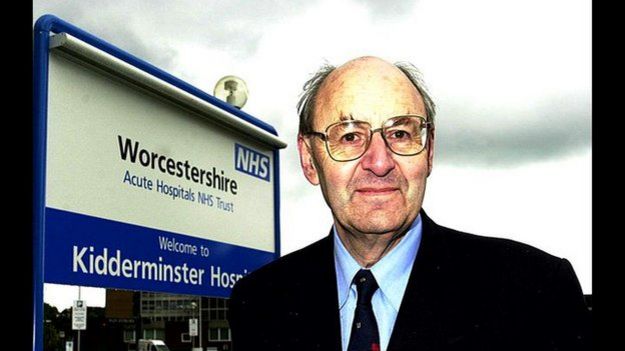
In brief, BBC news has a profile of the most successful independent MP of recent years; a doctor who in 2001 stood for a single policy, to save his local hospital in Kidderminster. Dr Richard Taylor won again in 2005 but lost in 2010. He is now standing again as leader of the National Health Action Party.
Dr Richard Taylor. Picture Credit: BBC News

Good for any G and P student contemplating independent MPs and also wondering about the difference between political parties and pressure groups. The NHA certainly has a narrow focus, but does blur the lines between a party and a pressure group.

Saturday, 28 February 2015

Conservative Party and devolution. Labour and tuition fees

Two headline-grabbing political policies from the two main parties:

Conservatives


Cameron promises to give the Welsh Assembly more powers, including being able to call itself a Parliament and being able to raise its own income tax. Interesting for G and P students in unit 1 considering how Cameron has changed the Conservative party since the days of Thatcherite concentration of power in Westminster.

Labour


Miliband promises to lower tuition fees for University students to £6k from its current £9k. Again - interesting to consider how this fits into the narrative about the Labour party and its move away from / back towards more left-leaning policies.

The BBC's Robert Peston analyses the fiscal implications of all of this here.


Republican Conservatism according to Rolling Stone

I've just come across this piece from Rolling Stone Magazine which explains an aspect of modern tea-party-inspired Republicanism:
The entire narrative of modern conservative politics casts the United States as a fast-disappearing Eden of freedom and democracy that's under siege both here and abroad, surrounded by a constellation of enemies united (for some never-fully-explained reason) in their passionate hatred for the simple, God-fearing, freedom-loving American.
While this rock'n'roll magazine is by design fairly liberal, it is certainly food for thought for anyone contemplating the nature of Republicanism (although for my money I don't think that quoting Fox News and saying that it can be very anti-liberal is especially surprising).

Protests in the snow against a pipeline. Picture credit - BBC

Elsewhere, the President has done his third veto about the "Keystone" pipeline between Canada and USA - essentially to make the point that only the President can make international agreements and not Republicans in Congress.

Embedded is a great video explaining why the pipeline is so controversial:


Monday, 19 January 2015

Should voting be compulsory?

AJB has pointed me towards an article on the BBC's web-site which discusses whether voting should be compulsory. Great for the Democracy section of Unit 1.

In addition, he has also found this - an item on whether party leaders actually win elections. The short version - probably not.

In a related piece, the Independent covers three polls which came out at the same time, and which have different results - the answer is too close to call an probably won't be known until the election itself is run.

Great stuff!

Thatcher and Europe

Any G and P student studying Unit 1 should be able to discuss some of the policies of Margaret Thatcher and how the current Conservative Party compares.

One of the many points of comparison is certainly Europe, and the Atlantic is on hand to offer some analysis. The take-home message is that although Thatcher was against the Euro and famously won the British rebate she was not rabidly anti-Europe as some make out.

Here is a clip of her in full flow giving her response to the suggestion that Britain gives up the Pound and agrees to a larger integrated Europe (go to 2:05 for the famous bit).


Big Block of Cheese Day

Anyone who is a fan of the West Wing TV show should remember an episode in Season 1, called "The Crackpots and These Women", where Leo refers to President Andrew Jackson who put a big block of cheese in the White House for anyone who wanted it. In the TV drama special interest groups are given access to senior staff to press their causes.

The real White House has taken this as inspiration and created their own "Big Block of Cheese Day"; this time on the internet. Specifically they are devoting a day after the State of the Union on 20th January for members of the Obama administration to answer questions on line about issues raised in the set-piece speech.

For G and P students studying Unit 4C this is useful because it is a good example of the President's administration communicating their ideas with the public. It is also a good example of when the President is trying to press his agenda in the media using the "bully pulpit" of the State of the Union.

Here is the video from the White House with a few familiar faces thrown in:


Friday, 26 December 2014

Labour and Scotland - party differences?

A post on the BBC blog from Mark Mardell is fascinating for many reasons; for G and P students studying Unit 1, especially significant since it discusses the implication of devolution on party policy. The party has elected a former Blairite to be the leader of Labour in Scotland.

To be specific, the Labour Party in Scotland is likely to be more "left-leaning" than the party in Westminster as Scotland itself is on average (Mardell argues) more left-leaning than England is on average.

There are implications for the Labour party in the 2015 election; if it loses enough of its Scottish Westminster seats to the SNP as currently seems likely, then it will not be able to win power at Westminster. I posted about this earlier in the year:

Picture Credit: UK Polling Report
The implications for party policy across the UK is potentially significant, with parties increasingly having their own national policies better suited to local issues. This may in turn help lead to a more federal UK.

However, Labour is the only party which has (had?) a large established following in Scotland, closely followed by the Lib Dems. The Conservative Party has little power in Scotland, or much of Wales. Therefore, how the Labour Party deals with these issues over the next few years is potentially very important for the rest of the UK and its political parties.

This is also probably an issue worth bringing up in any question about party policy / traditions and devolution.

Saturday, 20 December 2014

Constitutional Reform - Coalition in action

The Coalition has released proposals which aim to solve the so-called "West Lothian Question"; or to put it another way, "English Votes for English Laws".

Proposals on how to change the British constitution further have been announced by Commons Leader William Haig. The Coalition released a document which explains the ideas put forward by both parties - fascinatingly, the final part has the different ideas of the two parties in colour-coded sections.

G and P students certainly need to bear in mind that constitutional reform is an important theme of Unit 2 and that current issues, like the Scottish Referendum and the ensuing repercussions should be mentioned.

Wednesday, 10 December 2014

Senate Report on Torture

The Senate, in its last days before becoming Republican-dominated, has just published a report into the interrogation techniques used by the CIA after 9/11.

G and P students should bear this in mind when considering the effectiveness of Congress's oversight of the Executive; finally these techniques are called "torture". However, according to Rolling Stone no-one will get prosecuted for it.

The article discusses the likelihood of the Obama administration being investigated for similar things in future, and reckons it's probable. However, this all may be more about political partisanship than effective oversight by the legislature.

Fascinating stuff.